
Prepaid Sub-Meters for Landlords & Rentals
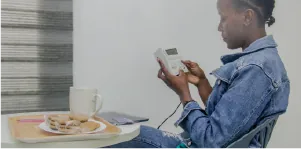
Give every tenant their own prepaid meter. Collect electricity payments upfront and put an end to shared-bill disputes.
The problem
Why landlords move to prepaid sub-meters
For many landlords, electricity is the most common source of tenant disputes. Shared bills get split by guesswork, arrears build up, and someone always feels they are paying for a neighbour.
A prepaid sub-meter on every unit removes the guesswork. Each tenant buys their own credit and sees exactly what they consume. You sell tokens through your vending system, so the money reaches you before the electricity is used, and you stop fronting the bill and chasing late payers.
Our guide on why prepaid metering makes sense for landlords goes deeper on the reasoning.
How it works
How tenant sub-metering works
- 1
Meter every unit
A prepaid sub-meter is installed for each room, flat or shop, in a meter room or meter box.
- 2
Register tenants
Meters and tenants are set up in the [vending system](/solutions/vending-management), with your tariff.
- 3
Tenant pays
The tenant pays for credit and receives a 20-digit STS token for their own meter only.
- 4
Supply follows credit
The tenant enters the token, the meter adds the credit, warns when it runs low and disconnects at zero.
Fair billing
Ending billing disputes for good
When every tenant has a meter that shows their own balance, there is very little left to argue about.
- Each tenant pays only for their own consumption
- Balance and usage are visible on the meter or indoor unit
- No estimates and no month-end bill to split
- Low-credit warnings give tenants time to top up
- Emergency credit can bridge short gaps
- Automatic disconnection at zero credit replaces awkward site visits
Recommended models
Which prepaid meter for which property?
Match the meter to the building. These are the models we most often recommend for rentals.
Apartment blocks and hostels
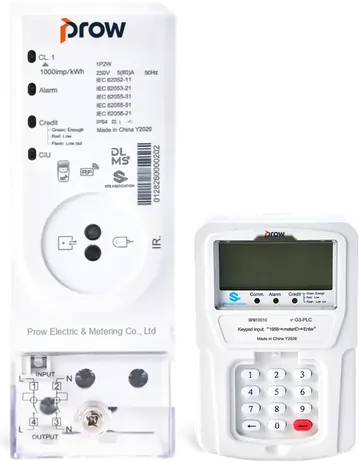
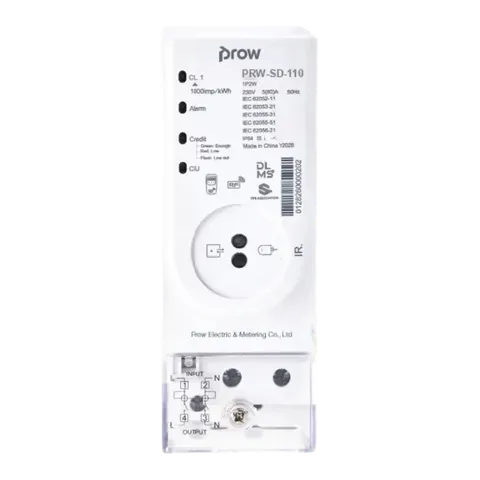
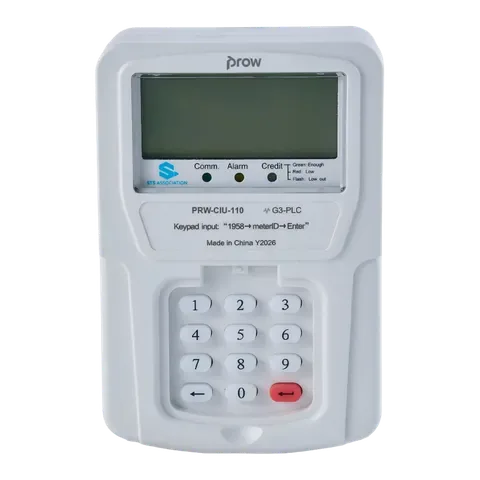
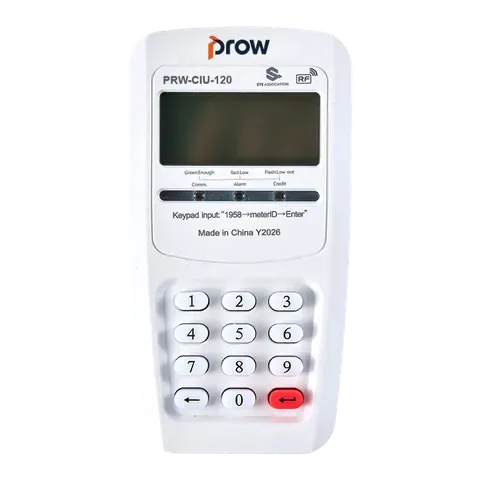
Our lead recommendation. The PRW-SD-110 stays in a locked meter room while tenants enter tokens on an indoor unit (PRW-CIU-110 over power line, or PRW-CIU-120 over RF). If someone removes the terminal cover, the relay opens, even during a power cut.
Single rooms, shops and small houses
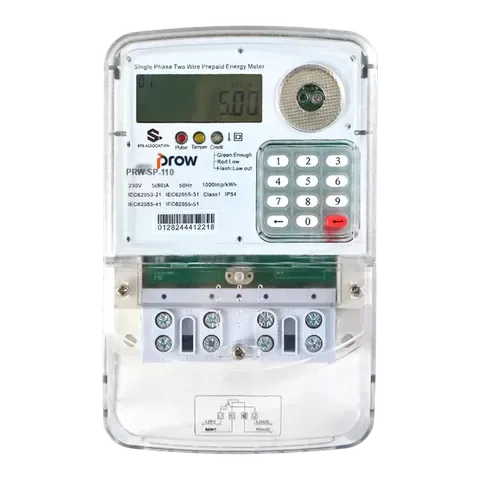
The PRW-SP-110 puts meter, keypad and display in one compact housing. It is a simple, cost-effective choice for rental sub-metering and small commercial sites.
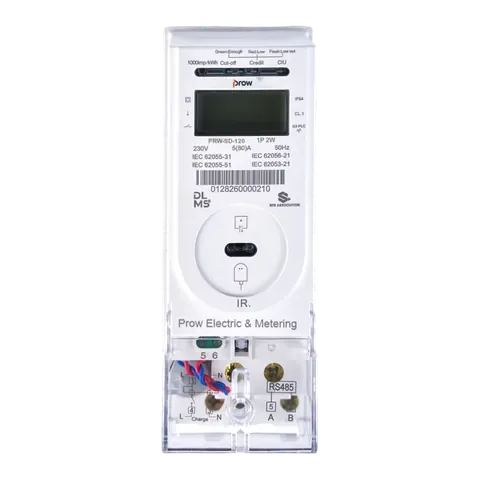
Managed blocks that want a mirrored display
The PRW-SD-120 mirrors the meter display on the tenant’s indoor unit and adds adjustable emergency credit and multi-tariff support.
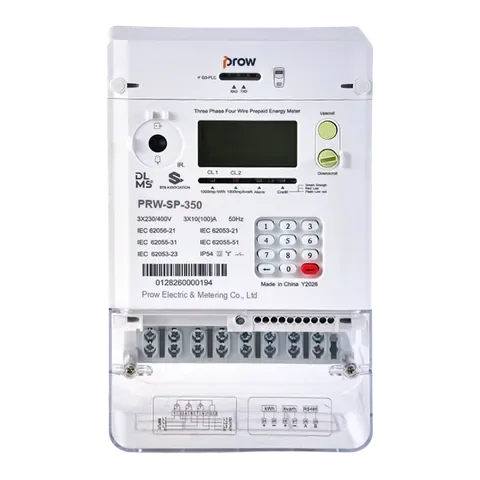
Larger commercial tenants
For shops and workshops on a three-phase supply, the PRW-SP-350 brings keypad prepayment to three-phase, four-wire loads.
Installation
Installation steps for a rental property
Installation should be carried out by a qualified electrician. Our team supports each stage.
- 1
Survey
Count units, confirm single or three-phase supply and decide where the meters will sit.
- 2
Choose models
Pick keypad or split meters, indoor units and meter boxes to suit the building.
- 3
Install
Fit the meters and indoor units, then commission each one.
- 4
Set up vending
Register meters and tenants, set your tariff and test a token end to end.
- 5
Go live
Brief your caretaker and tenants on topping up, then start selling tokens.
Why Prow
A local team for landlords in Kampala
We are at Ntinda Shopping Centre, Room D-16. Visit, call +256 703 353 316 or request a quote with your number of units and building type, and we will recommend the right setup. For the wider range, see our prepaid meters in Uganda page.
Indoor units and enclosures for rentals
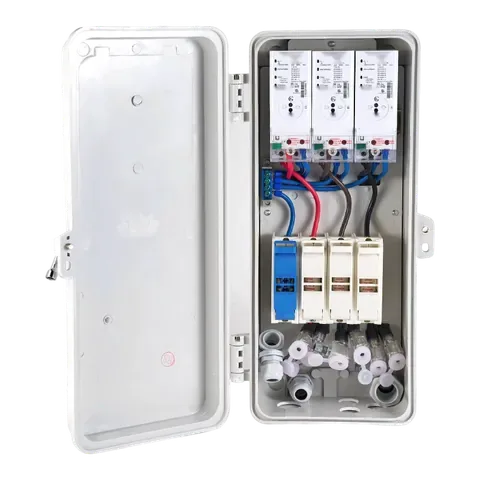
Pair split meters with an indoor unit and a protective meter box.
FAQ
Frequently asked questions
Who pays the main electricity bill?
The landlord stays the account holder with the utility. Prepaid sub-meters let you collect payment from each tenant before they use the power, so you are not left covering the shared bill.
What if a tenant runs out of credit at night?
The meter warns the tenant as credit runs low. Emergency credit can be configured to bridge short gaps, and the PRW-SP-150 also supports a weekend and holiday friendly-credit mode.
Can tenants tamper with the meters?
Keypad meters detect cover-open events. With split meters the hardware stays in a locked meter room, and the relay opens if the terminal cover is removed, even during a blackout.
Can I set the price per unit?
Tariffs are set in the vending system. Check the rules that apply to reselling electricity with your utility or the relevant regulator before you set your rate.
Can I mix rooms, flats and shops?
Yes. Single-phase meters suit rooms and flats, and the three-phase PRW-SP-350 suits larger commercial tenants. We can specify a mix for one building.
Do you install the meters?
Our Kampala team advises on meter selection and supports installation, commissioning and vending set-up. Installation should be done by a qualified electrician.
How do I get started and get a price?
Use the Request a Quote form or email metering@prow.ug with your number of units and building type. We reply with a quotation and lead time.
Visit or call Prow
Ntinda Shopping Centre, Room D-16, Bukoto–Ntinda Road, Ntinda, Kampala, Uganda
Related

Not sure which meter you need? Answer 4 quick questions and we’ll point you to the right one.