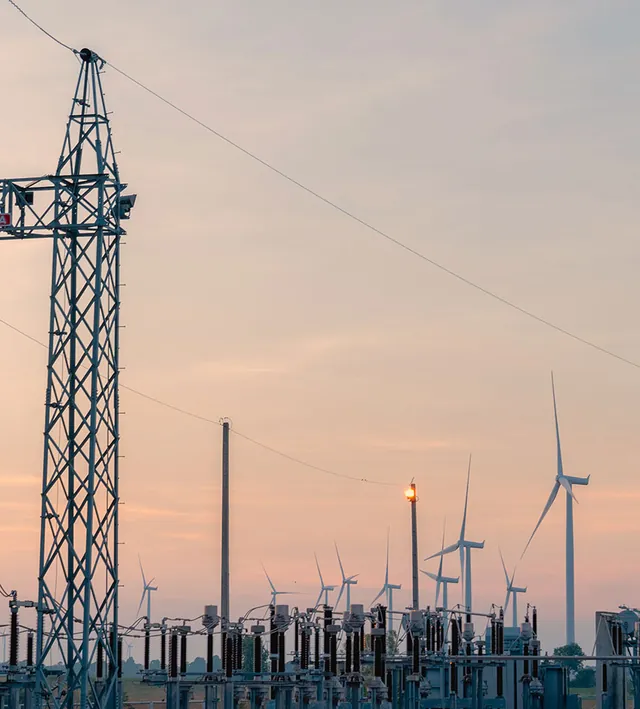
Smart & 4G Meters for Utilities, Estates & Businesses
AMI-ready smart meters, data concentrators and a vending and management system for remote reading, remote disconnect and prepaid control.
The basics
What is a smart (AMI) meter?
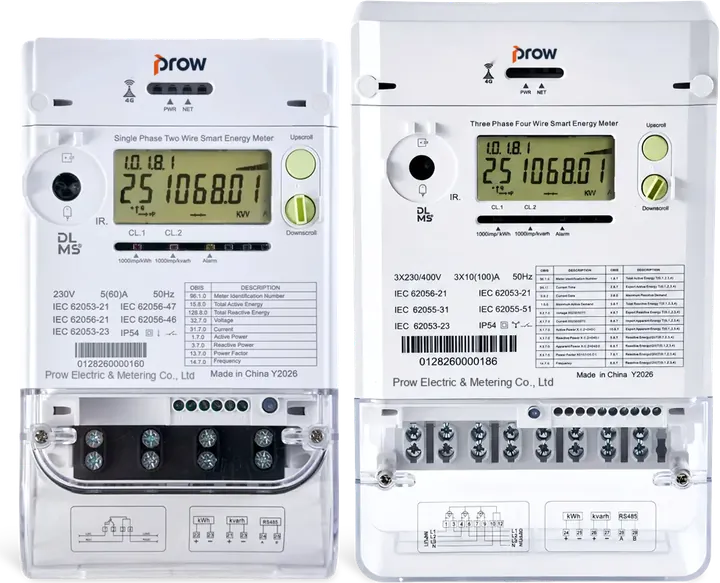
A smart meter measures electricity and reports it automatically over a communication network. Advanced Metering Infrastructure, or AMI, is the whole system: the meters, the network that carries their data and the head-end software that collects it. Communication runs both ways, so you can read a meter and also send it commands.
Prow smart meters and data concentrators use the open DLMS/COSEM protocol, so your data stays accurate, secure and interoperable. Smart meters are also the keystone of a smart grid, which our guide to what a smart grid is explains.
Architecture
How an AMI system fits together
- 1
Meters measure
Smart meters record energy, demand, load profiles and events such as cover-open.
- 2
Data travels
Readings go over 4G directly, or over PLC, RF or RS485 to a data concentrator.
- 3
Head-end collects
The concentrator forwards encrypted data over 4G or Ethernet to your head-end system.
- 4
You act remotely
Change tariffs, connect or disconnect supply and upgrade firmware from your desk.
The hardware
Smart meters and data concentrators
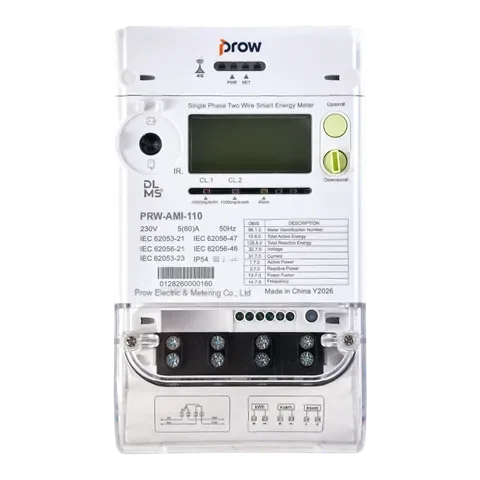
Single-phase smart meter
The PRW-AMI-110 supports 4 tariffs with 8 time slots a day, 12 months of billing data, multi-channel load profiles and remote connect and disconnect through its internal relay.
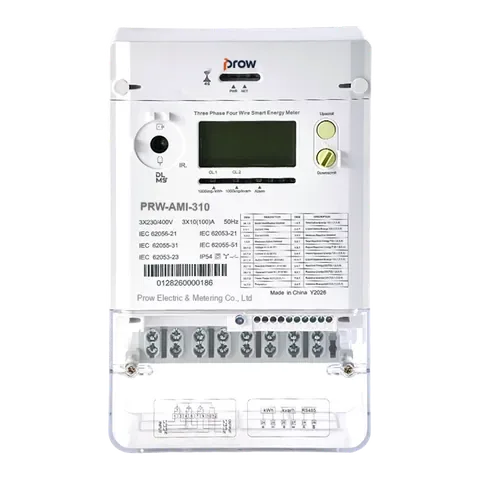
Three-phase smart meter
The PRW-AMI-310 measures active energy to Class 1.0 and reactive to Class 2.0, monitors harmonics and switches between prepaid and postpaid modes.
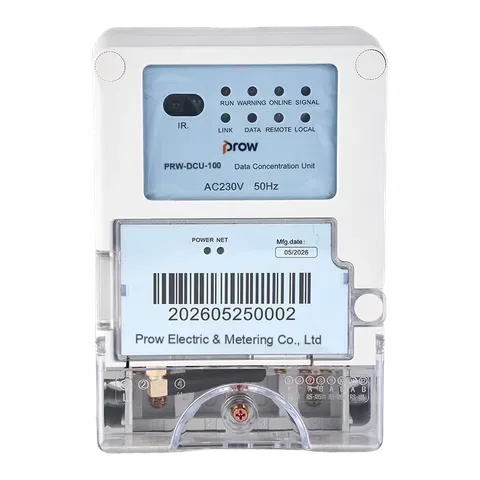
Compact data concentrator
The PRW-DCU-100 collects data from up to 32 meters over PLC, RF or RS485 and forwards it over 4G or Ethernet with AES-128 encryption.
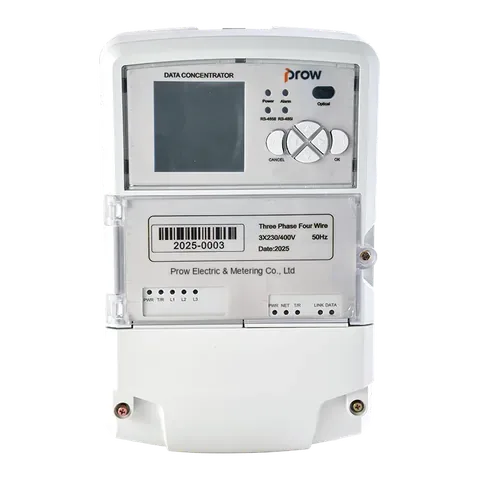
High-capacity data concentrator
The PRW-DCU-300 handles up to 200 meters per unit and connects over 4G, Ethernet or fibre, retaining data through power loss.
Remote operations
Remote reading and remote disconnect
Connected meters replace site visits with actions from the office.
- Read consumption and load profiles automatically
- Connect or disconnect supply remotely
- Update tariffs across your network
- Upgrade meter firmware locally or remotely
- Receive event logs and cover-open detection for tamper visibility
- Switch supported meters between prepaid and postpaid modes
Communication
4G, PLC or RF: choosing the link
4G suits scattered sites where each meter connects directly. In dense buildings and estates, PLC or RF links to a data concentrator are often more economical, with the concentrator carrying the data to your head-end over 4G or Ethernet.
Our guide to 4G remote management compares the options, and we help you choose during project planning.
The software
Vending and management system
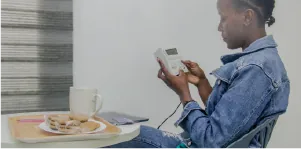
Smart meters are most useful with software behind them. The vending and management system handles customer accounts, tariffs, STS token generation, sales and consumption tracking and reports, and can add remote recharge for smart and 4G-connected meters.
You can connect your own sales channels through API integration. Payment channels, including mobile money, are configured for each project.
Who it is for
Who needs smart metering?
Smart metering pays off wherever visiting meters is slow or costly.
- Utilities and mini-grids rolling out AMI
- Estates and industrial parks
- Commercial buildings and managed properties
- Operators combining prepaid sales with remote control
Why Prow
Planning support from Ntinda, Kampala
Our team at Ntinda Shopping Centre, Room D-16 helps you design the architecture, choose between direct 4G and concentrators, and set up the vending system. Call +256 703 353 316, email metering@prow.ug or send details through the quote form.
More smart and connected meters
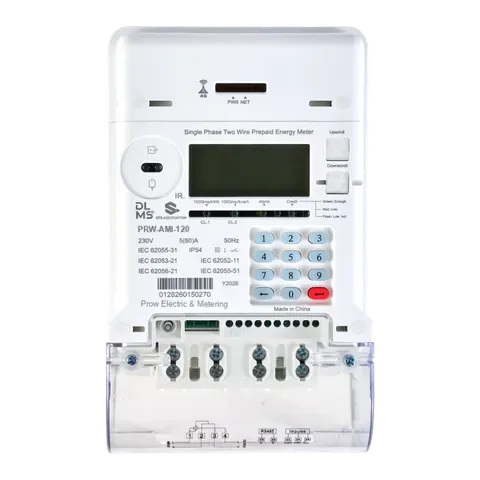
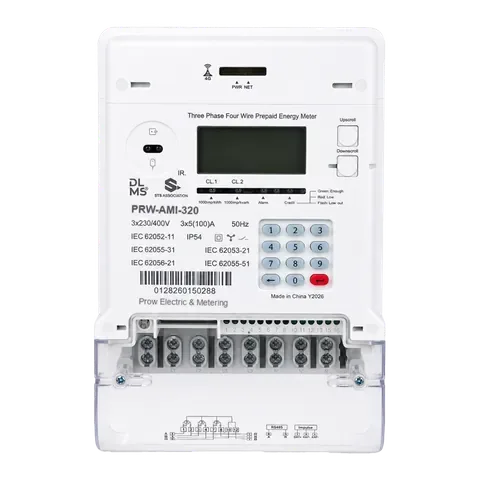
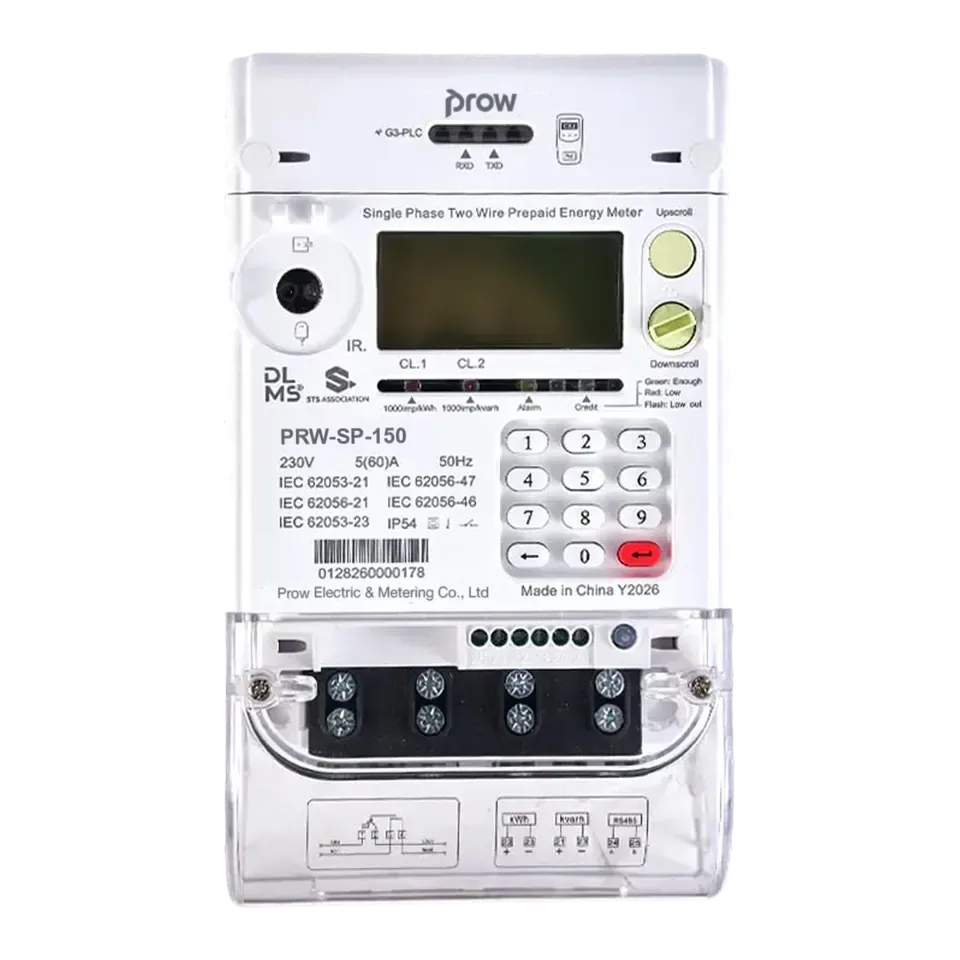
Add a local keypad, three-phase capability or a prepaid meter ready for remote modules.
FAQ
Frequently asked questions
What can I do remotely with a smart meter?
Read consumption and load profiles, change tariffs, send credit, connect or disconnect supply and update firmware, over 4G directly or through a data concentrator using PLC or RF.
Do I need a data concentrator?
Not always. Meters with a 4G module connect directly. For many meters in one building or estate, a concentrator using PLC or RF is usually more economical.
Which protocol do the meters use?
Our smart meters and concentrators support DLMS/COSEM, the international standard for meter data exchange, with AES-128 encryption on the concentrators.
Can smart meters also work as prepaid meters?
Yes. Our smart meters support token-based prepayment, and models such as the PRW-AMI-310 can switch between prepaid and postpaid modes.
How many meters can one concentrator handle?
The PRW-DCU-100 connects up to 32 meters and the PRW-DCU-300 up to 200 meters.
Is smart metering only for large utilities?
No. Deployments scale from a single estate or building to larger rollouts. Tell us your site and we will advise on the right architecture.
How do I start a smart metering project?
Use the Request a Quote form or email metering@prow.ug with meter types, quantities and project location. We reply with a quotation and lead time.
Visit or call Prow
Ntinda Shopping Centre, Room D-16, Bukoto–Ntinda Road, Ntinda, Kampala, Uganda
Related
Not sure which meter you need? Answer 4 quick questions and we’ll point you to the right one.